New research highlights how we can predict and overcome resistance to gene drives for malaria control
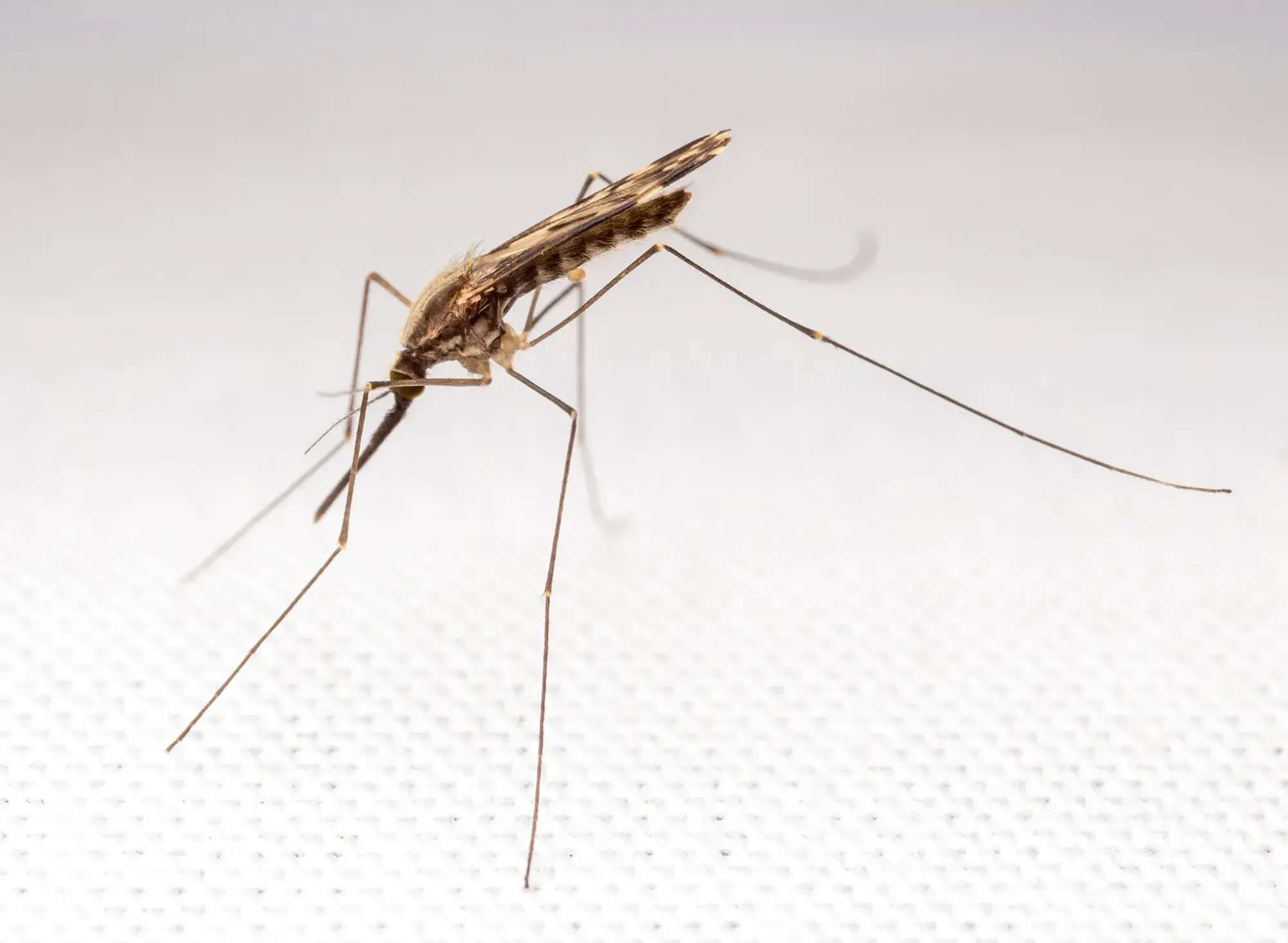

Malaria remains one of the world’s most devastating diseases, placing millions of people at risk every year, particularly across sub-Saharan Africa. While existing interventions, such as insecticide-treated bed nets, indoor residual spraying and antimalarial medicines have saved countless lives, the disease continues to pose a major public health challenge. To achieve lasting progress, we need to continue exploring additional tools that could complement existing malaria control strategies.
I am sharing research by Ioanna Morianou and colleagues from the Crisanti Lab (Imperial College London) , published in PLOS Biology, which examines one of the most important scientific questions facing the development of gene drive technology for malaria control: how can we anticipate and overcome genetic resistance? The title of the paper is: Engineering resilient gene drives for sustainable malaria control by predicting, testing and overcoming target site resistance in Anopheles gambiae.
Gene drives are designed to increase the likelihood that a particular genetic trait is inherited, allowing it to spread through a population more rapidly than through normal inheritance. In mosquitoes, gene drives can be designed to target genes that are essential for female fertility or to stop the parasite from passing from mosquito to human.
In the case of fertility, as the trait spreads, the number of mosquitoes capable of reproducing can decline, potentially reducing populations of malaria-transmitting mosquitoes. Like any population suppression approach, however, gene drives are expected to create evolutionary pressure. This means that, over time, genetic changes can arise that prevents the gene drive from recognising and cleaving its target sequence. Those genetic changes can be naturally present in the wild mosquito populations, or could be generated by the action of the gene drive itself. If those changes (i.e. resistant alleles), are still impacting the target gene, they are not selected and likely lost. If, however, those changes preserve the mosquito’s ability to reproduce, we called them functional resistance, and they could reduce the effectiveness of the gene drive.
Understanding and assessing the likelihood of this possibility before any future application is a critical part of gene drive development. In our study, we focused on Ag (QFS)1, a population suppression gene drive targeting the female-specific form of the doublesex (dsx) gene in Anopheles gambiae. This gene drive has previously achieved complete population suppression in laboratory cage studies without detectable resistance. However, natural mosquito populations are far larger than those studied in laboratory settings, meaning that even extremely rare resistant variants could become important at scale.
To investigate this challenge, we developed a new experimental framework capable of generating and screening thousands of genetic variants. This allowed us to explore what we call the “evolutionary space” for resistance: the range of mutations that could potentially arise and interfere with gene drive activity.
The results were reassuring and informative. We found that the most common naturally occurring genetic variant present at the target site remained fully susceptible to the gene drive (in other words, it was not a resistant variant). At the same time, our screening approach identified rare mutations capable of reducing or blocking gene drive activity. Among these were fully resistant variants, as well as a previously undescribed category of partially resistant variants. These mutations preserve the function of the target gene while only partially reducing gene drive activity.
By combining experimental data with population genetic modelling, we were able to estimate the likelihood that resistance might emerge in populations of different sizes. Our analyses suggest that while a single-target gene drive can perform extremely well in laboratory populations, resistance becomes increasingly likely as population size increases. This finding highlights the importance of stress-testing gene drive designs under conditions that more closely reflect the scale of natural populations.
The same mathematical model also points toward a potential solution. Using what we learned about resistance, we engineered new multiplexed gene drives that target multiple conserved sites within the dsx gene simultaneously. Rather than relying on a single target site, these designs use two or three guide RNAs, making it substantially less probable for mosquitoes to accumulate the mutations needed to escape gene drive activity.
Our experiments showed that these multiplexed drives can actively remove resistant variants when at least one target site remains susceptible. In laboratory tests, they maintained very high inheritance rates and demonstrated strong population suppression performance.
This work represents an important step in understanding how resistance may arise and how it can be addressed through improved design. It also demonstrates the value of proactively studying potential challenges early in the research process.
While additional research will be needed, including studies that better reflect the complexity of natural mosquito populations, these findings provide an important foundation for the development of robust and resilient gene drive systems aimed at reducing malaria transmission.
Our hope is that this work will help inform the next generation of gene drives and contribute to the broader effort to develop new tools that could one day support the fight against malaria.