What happens in an insectary?
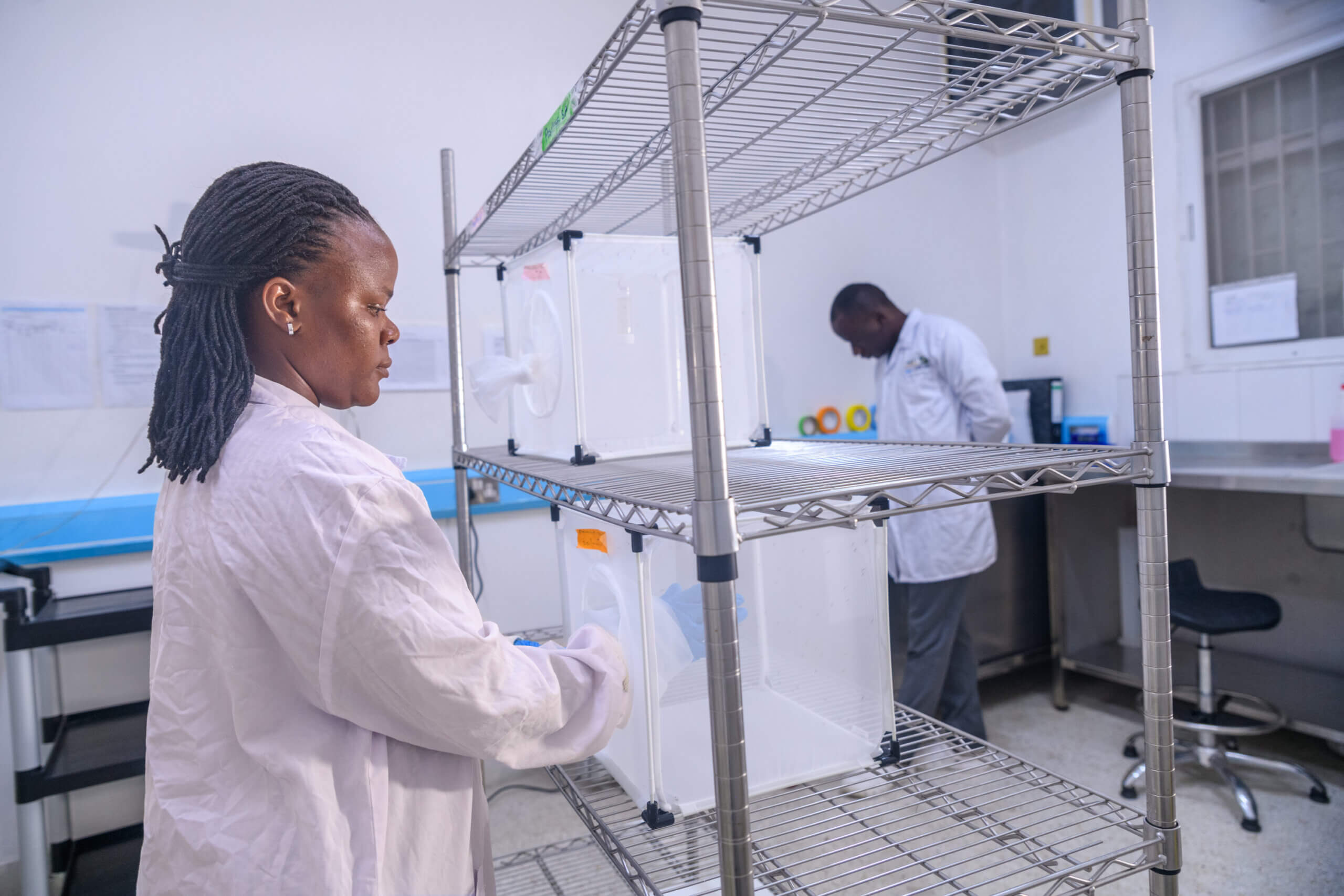

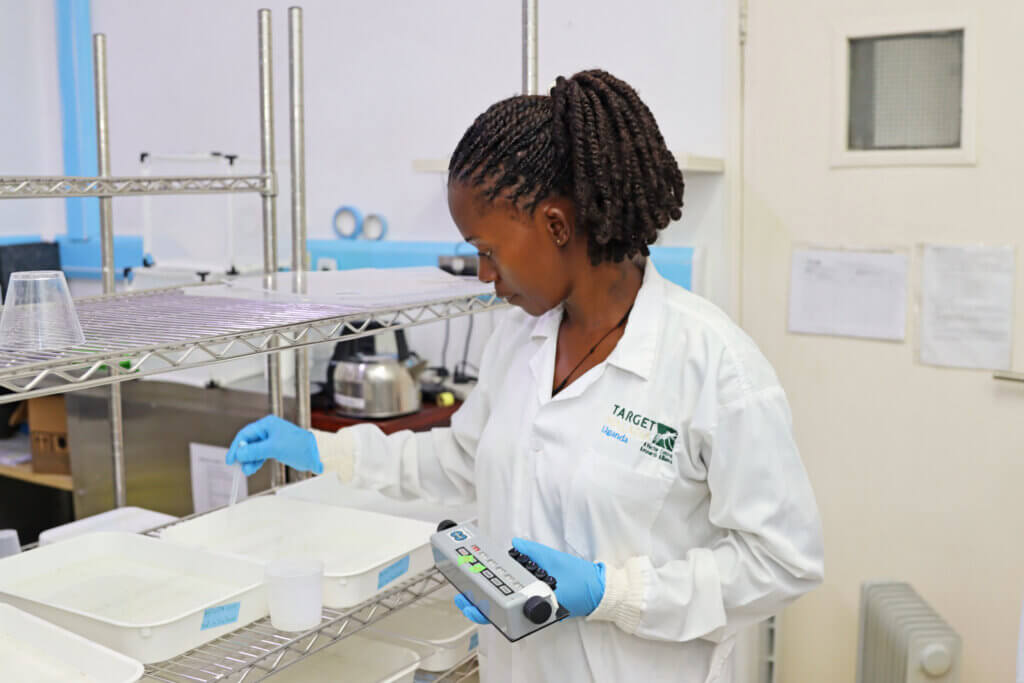
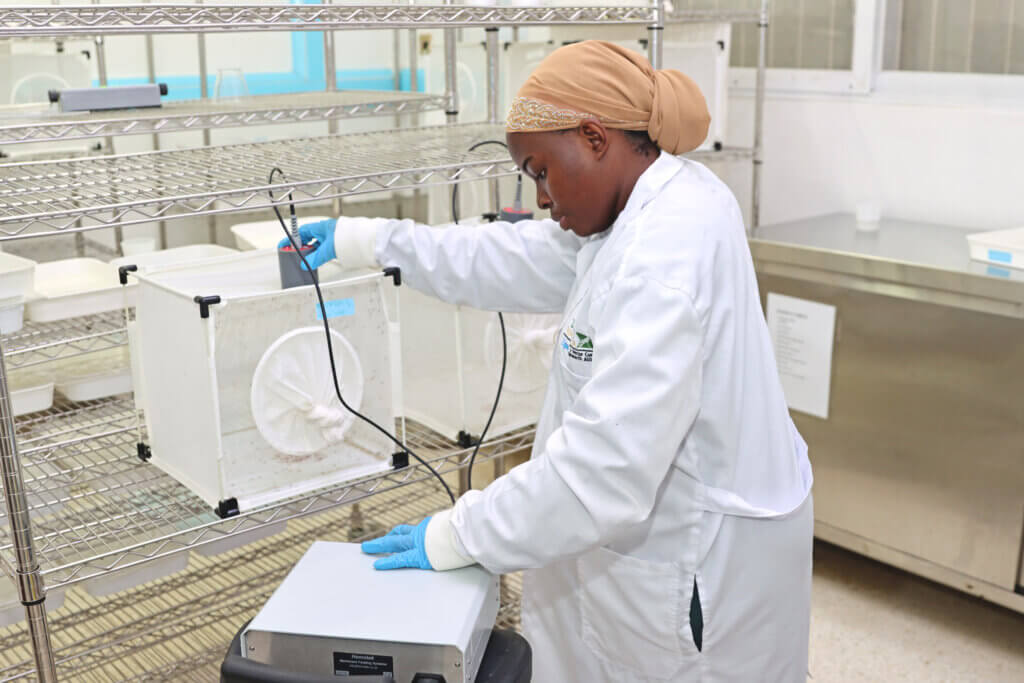
Have you ever wondered what goes on behind the secure doors of a mosquito containment research facility? These specialized laboratories, known as insectaries, are carefully designed spaces where scientists rear and study mosquitoes under strict environmental and safety controls. Take a glimpse into a typical day inside the Target Malaria Uganda insectary and discover how science and safety come together.
What does a typical day look like for someone working in an insectary?
My day starts with inspecting rearing rooms and checking mosquito cages. Staff verify equipment operations, environmental stability, and facility safety, including pest control tools, door seals, freezers, and monitoring systems. We want to make sure that no mosquitoes can escape and that other insects or animals cannot enter.
My main tasks involve rearing mosquitoes by feeding them with blood and sugar diets using the membrane feeding systems and tubes, cleaning trays, collecting eggs, and setting up new generations of mosquitoes for experiments.
Accurate record-keeping throughout the day ensures proper tracking of colony performance, like development time from egg to adult. We count the number of eggs laid per mosquito generation, the eggs laid in total and their hatching rates, and monitor environmental conditions i.e. humidity and temperatures in each room and freezers; thus maintaining high standards of insectary operation and research reliability.
What is containment in simple terms and why is it important?
Containment refers to safety and regulatory measures applied to prevent any escape of biological organisms from areas where they are maintained e.g. insects from the rearing facilities.
How do you simulate natural environments for mosquitoes in containment?
We use equipment, such as air conditioners to circulate warm air, air extractors to remove bad air, radiators to warm the rearing rooms and humidifiers to generate moisture to mimic the natural environment. A propelling fan in the middle of each room helps to circulate the air around the room evenly. Equipment such as the air conditioners, extractors and vents are sealed with fine mesh netting to prevent mosquitoes from escaping.
What kinds of observations do you make on mosquitoes in containment?
We keep track of how healthy the mosquitoes are by checking how well they fly and mate, how many females take a blood meal, and how many eggs they lay. We also watch how the eggs grow, how many mosquitoes die each day, how much sugar water they drink, and what they look like. In addition, we make sure their cages are not damaged, look for any pests nearby, and monitor the rooms temperature, humidity, and pest-control systems.
What safety protocols, physical barriers, and monitoring systems are in place to prevent escape?
We have biosafety and bio risk manuals, a number of Standard Operating Procedures (SOPs) and contingency plans to ensure safety.
The physical barriers include the integrated facility with windows sealed with Perspex (a kind of transparent plastic material we use to seal windows to prevent mosquitoes and it doesn’t easily break) and fine mesh, white paint inside the facility, strong and hole free mosquito rearing cages, UV traps and electronic rackets installed in the facility to help in terminating any loosely flying mosquitoes. Practices, such as waste autoclaving and restriction of access remain paramount in enhancing the role of physical barriers.
The facility also has covered drainage and clear roof gutters to allow free water flow in addition to filtering all the liquid waste draining from the facility. In addition, all the water to the facility is also filtered.