Creating safe spaces for dialogue on malaria research and prevention
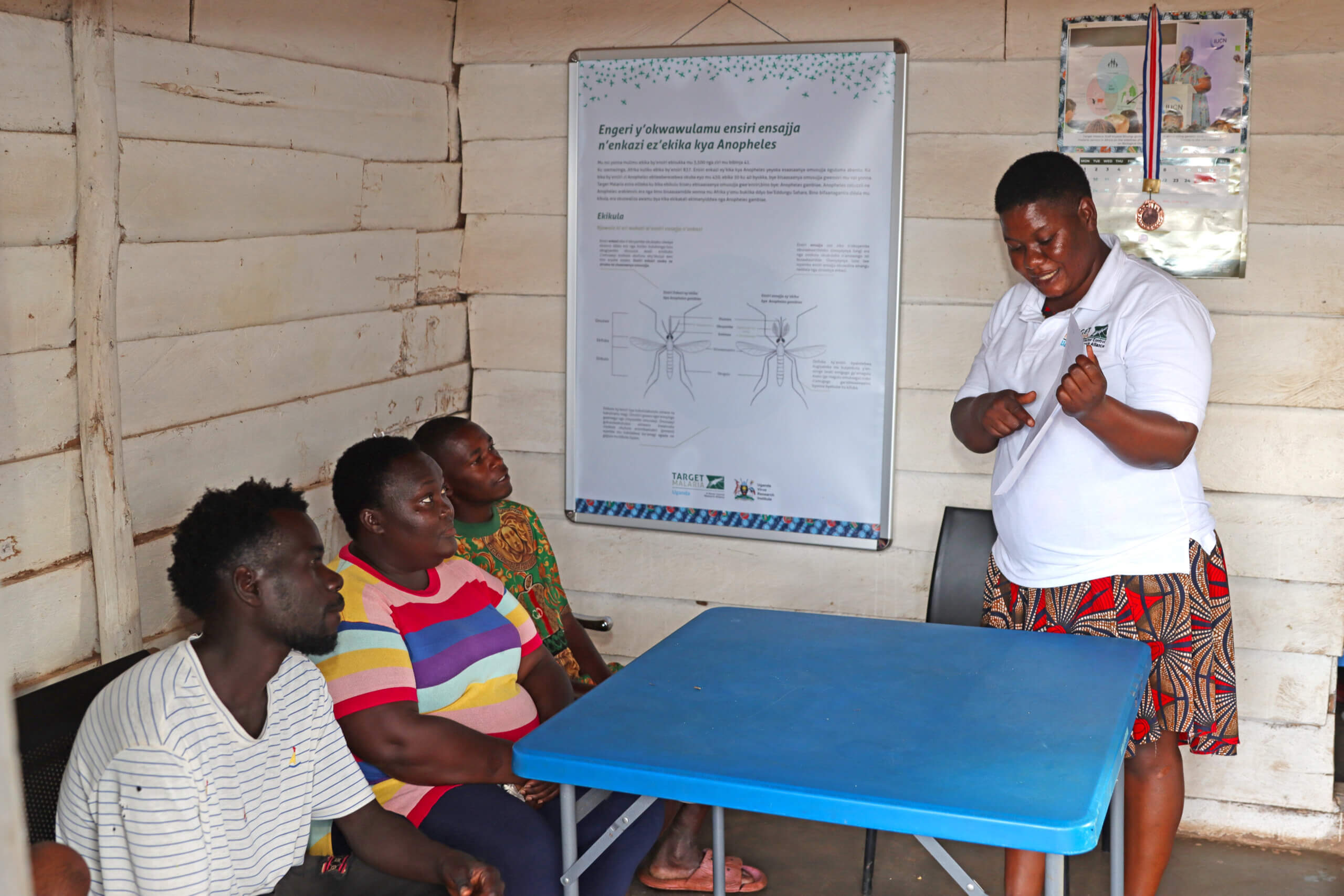
Allen Namata is a Target Malaria Uganda Community Field Stakeholder Engagement Assistant based in Kansambwe Village, Nsadzi Island, Mukono district working with the project to help turn scientific information into community understanding, helping families learn, share, and take charge of their fight against malaria.
How does your day start?
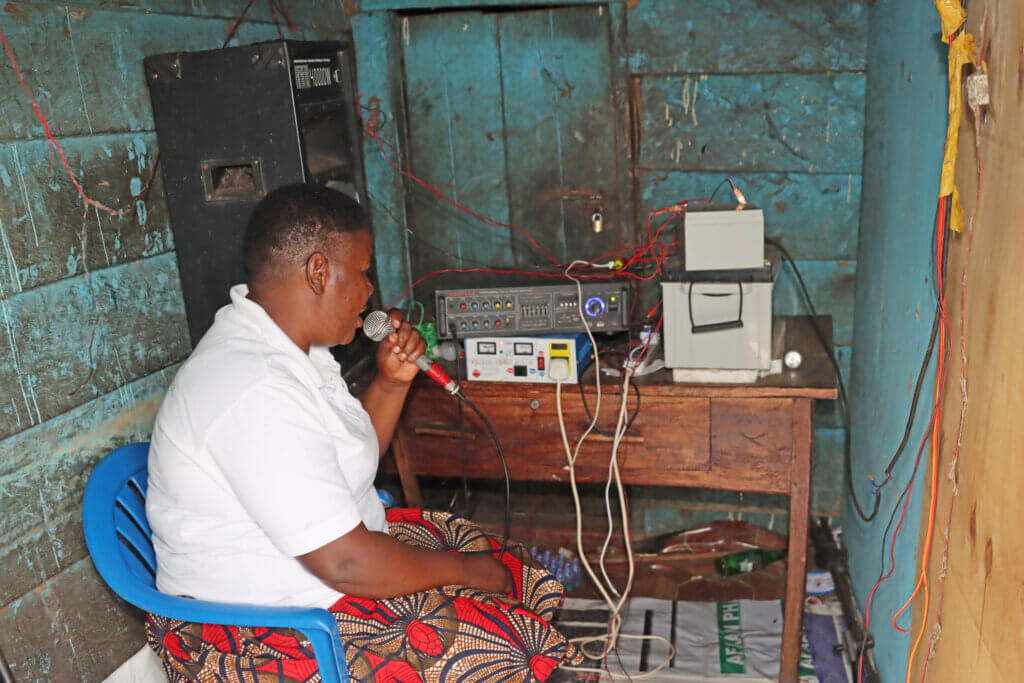
The first thing I do when I leave home is open the Target Malaria office on the island. I make sure everything is in order for the day. If there are some stakeholders needing information, I attend to them before I go to the community radio where I inform the community about malaria, such as what causes it, how to prevent it, and the ongoing research efforts by Target Malaria in our area.
What kind of questions do stakeholders usually ask you?
- When does malaria research end?
- Is there any change in malaria reduction?
- When is the field entomology team coming back?
- When are we receiving our project T-shirts?
These questions remind me just how invested the community is in the fight against malaria and how much they value being kept informed.
What are some strategies you use to ensure communities feel heard and respected?
To make sure community members feel heard and respected, I take their concerns seriously. I report their concerns to the team in time, and we use our office as a safe space where anyone can come and share challenges or feedback on the project activities. We have set up a suggestion box for those who prefer to share their thoughts privately, and the grievance committee meets regularly to discuss and address issues raised.
One of the most rewarding parts of my job is helping people understand scientific information in ways that are relatable. We often use local languages to explain technical terms, and we rely on photo interpretations and visual aids to make the science behind malaria control easier to grasp. It’s amazing to see people’s faces light up when they realize they understand something that once seemed complicated.
Have you had any challenging experiences you’d like to share and how have you countered them?
Of course, there are challenges, but patience and understanding are key. I try to listen to everyone carefully and ensure that their feedback is passed on to the right people.
Sometimes we engage the community as they go about their daily work like sewing and preparing nets and boats, and their concentration is sometimes divided but I make time to answer every question that comes my way and I always welcome them to our office for clarity.
What changes have you seen over time in how communities engage with our work?
Over time, I have seen remarkable changes in how communities engage with our work. People have become more knowledgeable about malaria prevention; they understand how mosquitoes breed, where to seek treatment, and the importance of using preventive measures.
What keeps you motivated?
What keeps me motivated are the small victories and the personal growth this work brings. Through this job, I have interacted with people from many different social backgrounds and my interpersonal communication skills have grown tremendously. I have learned the true meaning of teamwork, patience, and respect.
What are you most excited about in the future?
I hope to see the project achieving the desired aim of ending malaria. Every day in the field brings us a step closer to that goal and every conversation I have strengthens my belief in the power of community engagement.