Bridging data and communities in the fight against malaria
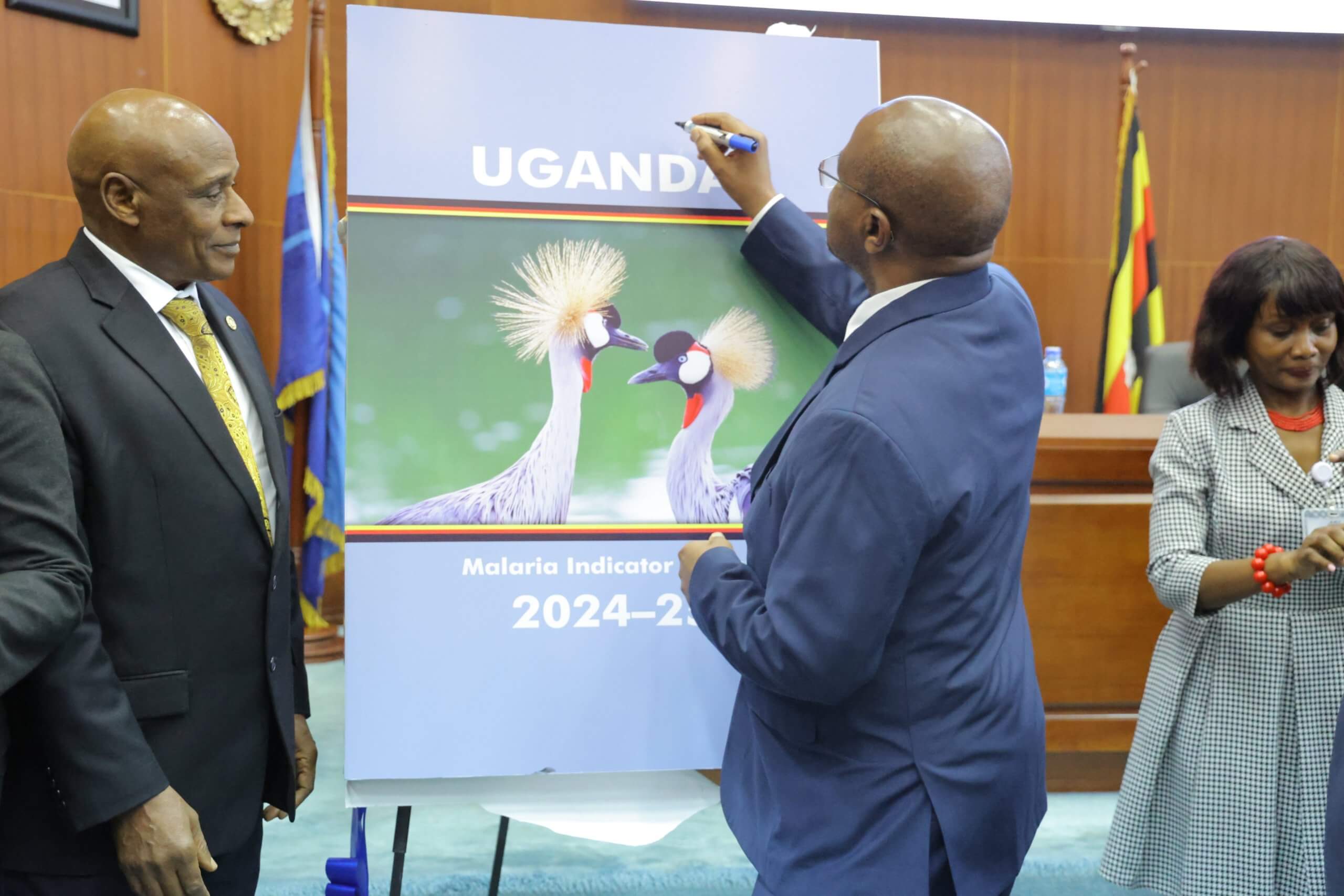

Target Malaria Uganda’s national Stakeholder Engagement team attended the dissemination of the 4th Uganda Malaria Indicator Survey (UMIS) 2024/2025, led by the Uganda Bureau of Statistics (UBOS).
The event brought together government officials, researchers, and development partners to review national malaria trends and discuss strategies to accelerate control efforts. Conducted every three years, the Malaria Indicator Survey provides essential data to track trends and measure progress in malaria control nationwide.
In his address, the UBOS Executive Director, Dr. Chris Mukiza highlighted that while Uganda has made progress in malaria control, malaria remains a major public health challenge and hoped that the survey would guide the strengthening of malaria control programs and inform national policy decisions aimed at reducing the malaria burden.
According to the survey, malaria prevalence among children under five increased from 10% in 2018/2019 to 13% in 2024/2025. The survey further revealed significant regional disparities, with the highest prevalence in Lango at 32%, followed by Karamoja at 26%, Acholi and Teso at 23%, and Busoga at 21%, while Kampala and Kigezi recorded the lowest prevalence at 1%. Household ownership and use of insecticide-treated nets (ITNs) has remained largely unchanged, indicating that existing prevention measures are not yet sufficient.
Hon. Amos Lugoloobi, Uganda’s Minister of State for Finance and Planning, called for strengthened malaria prevention strategies and encouraged researchers to develop strategies to combat the disease, and representatives from the World Health Organization, Global Fund, US Embassy, and civil society organizations emphasized the importance of coordinated action. The dissemination concluded that, while existing interventions such as insecticide-treated nets (ITNs) and indoor residual spraying (IRS) are being implemented, there is a need for new tools to eliminate malaria.
In conclusion, Target Malaria Uganda reaffirmed its commitment to advancing innovative, sustainable, and science-based vector control interventions that tackle the root causes of malaria transmission and accelerate Uganda’s path toward a malaria-free future.
Read more of the report here: https://www.ubos.org/wp-content/uploads/publications/03_2026Uganda_Malaria_Indicator_Survey_2024-25_Report.pdf