Gene drive video series wins Silver at the 2026 Lovie Awards

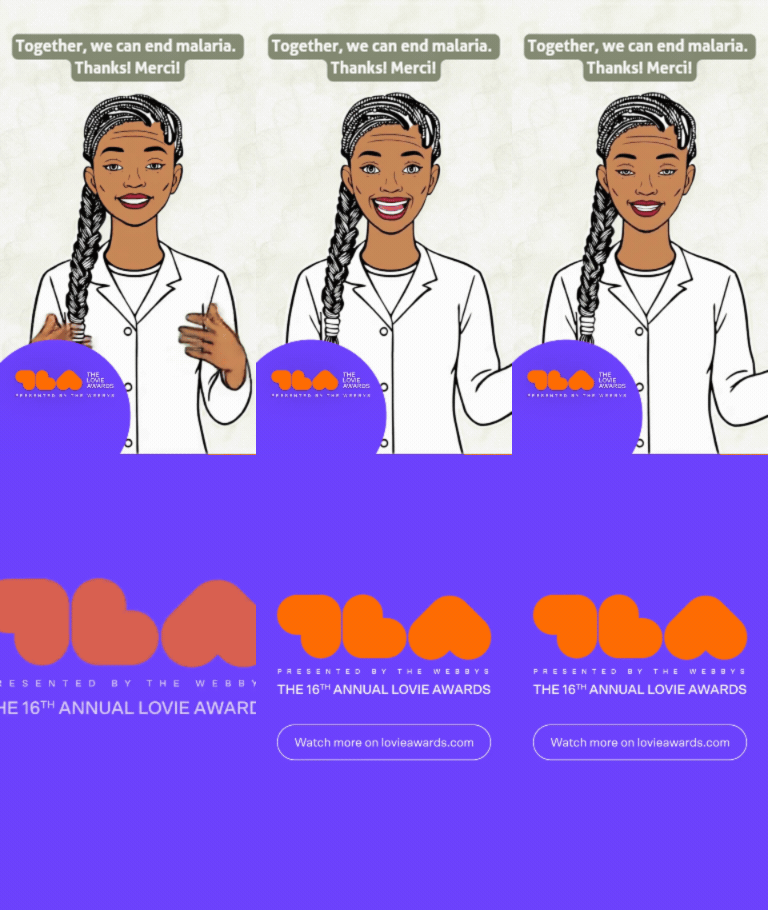
When I heard that our Gene drive video series had won Silver at the 16th Annual Lovie Awards in the Video & Film: Science & Education category, I felt incredibly proud. As art director at Target Malaria, this recognition means a great deal — not only for our creative team, but for everyone working to communicate the science behind our research with clarity and care.
What makes this award especially meaningful is the scale of the competition. This year, The Lovie Awards received nearly 1,300 submissions from more than 33 countries across Europe, with winners selected by the International Academy of Digital Arts & Sciences. To see our series selected as a Silver Winner among such a strong and diverse field is a real honour. It proves that thoughtful, creative science communication can resonate widely.
From the beginning, this project was about making a complex scientific topic understandable, engaging and visually compelling. Gene drive research can be difficult to explain, especially when it sits at the intersection of advanced science, global health and public dialogue.
Our goal was to create a video series that felt accessible and transparent — helping audiences better understand how genetically modified mosquitoes are being studied as a potential tool in the fight against malaria.
Behind the scenes, this series was a truly collaborative effort. It was created with the support of the Emerging ag inc. team with Tamsin Hibbert kicking off the project with support in scripting and storyboarding. Behind the camera were Dave Guttridge in London and Alessandro Foresti of White Rabbit Media in Terni, who filmed our team and labs in the UK and Italy. The voiceovers were recorded by our colleagues Divine Dzokoto from Ghana and Naima Sykes from Tanzania, who brought warmth and clarity to the films. Several scientists were interviewed: Dr Federica Bernardini and Louise Marston from the Crisanti Lab in the UK; Dr Alekos Simoni, Dr Jarek Krzywinski and Dr Roxana Minuz from the Polo GGB lab in Italy. They helped bring scientific expertise and authenticity to the screen. With the footage and voiceovers in hand, I moved on to the motion graphics and animations and edited the footage into four videos. Explaining gene drive through animation was the part I enjoyed most: it pushed me to understand the science properly and to discuss it with the scientists. Depicting the process accurately was a challenge, and a real pleasure to tackle with such a skilled team of experts, creatively and scientifically.
After a year of production, we launched the series in 2026 with the first part launched for World Malaria Day, the second for World Mosquito Day and the final two coming up next, in time for the launch of WHO’s World Malaria Report.
I’m deeply grateful to The Lovie Awards and the International Academy of Digital Arts & Sciences (IADAS) for this recognition and proud of everyone who helped bring this project to life. This Silver Award belongs to all of us.
