Games for Health Europe 2026
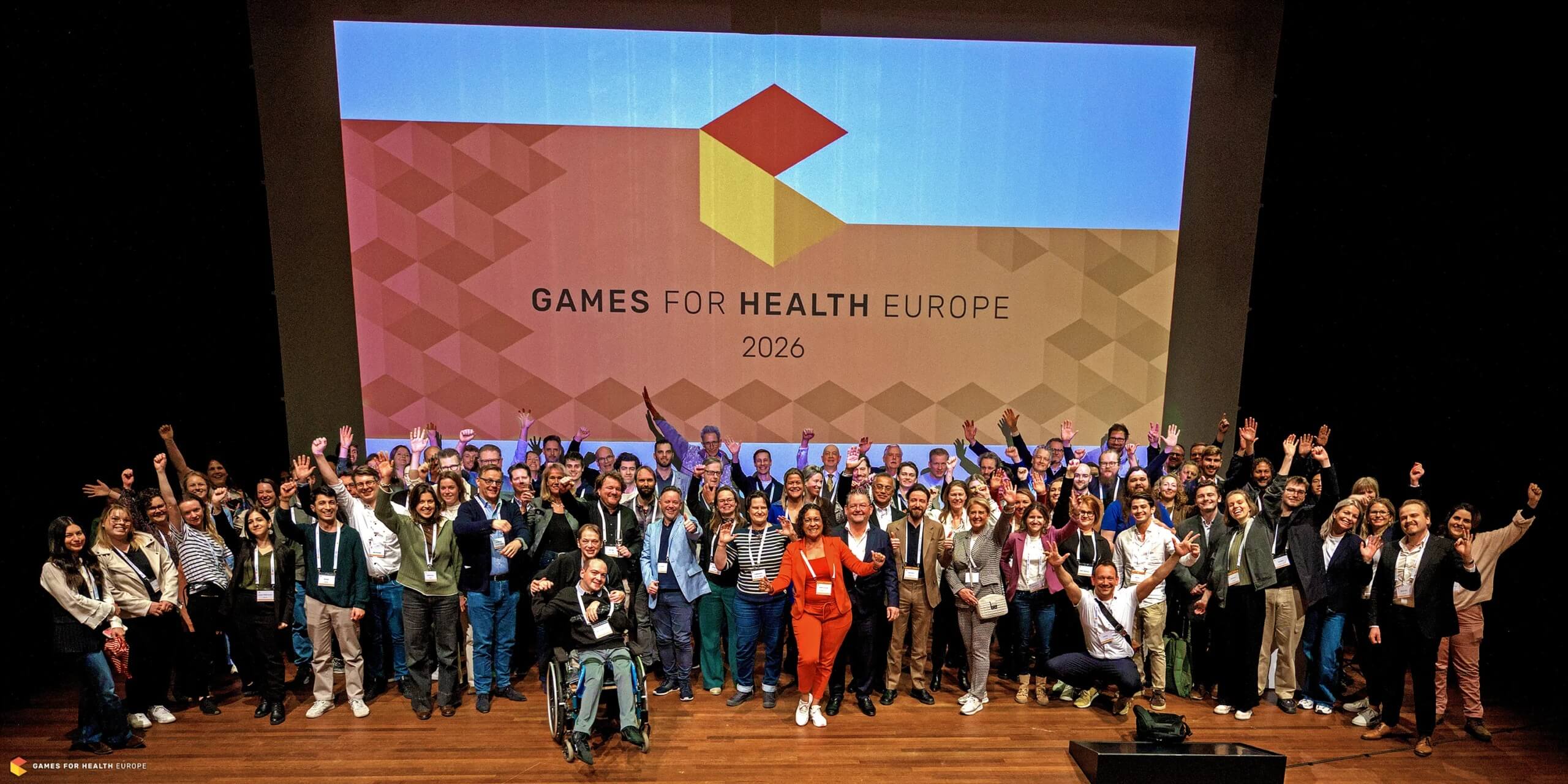

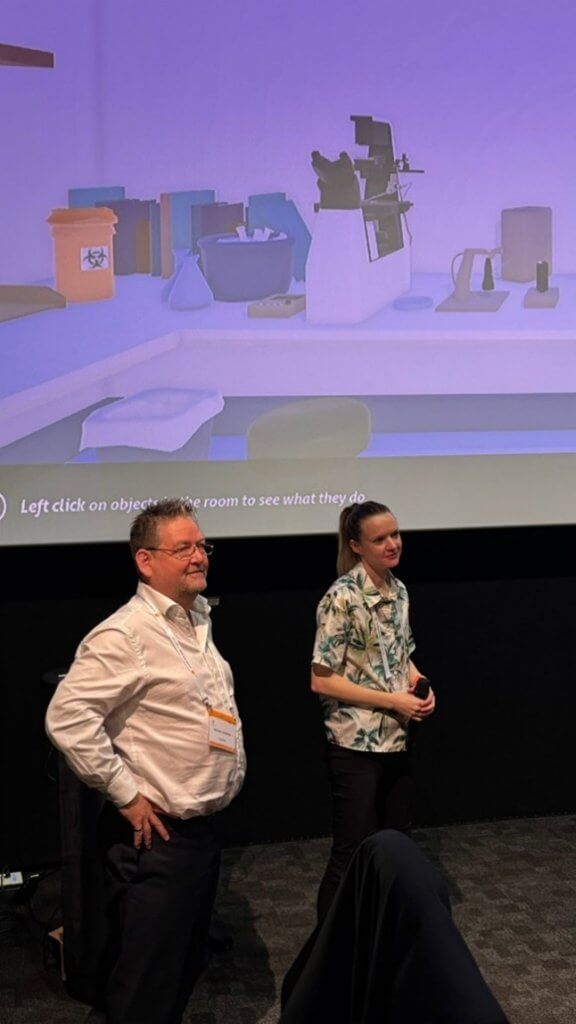
Games for Health Europe Founder, Jurriaan van Rijswijk (left), Louise (right).
Credit: Games For Health Europe
Eindhoven – the Netherlands’ “City of Light” – grew from its 19th-century industrial roots, when Philips sparked new lightbulb technologies. From there, it developed into a thriving ecosystem for communications, medical systems, and advanced electronics, drawing in talent and industry along the way. Today, it stands as a globally recognised hub for creative, innovative, and sustainable technology.
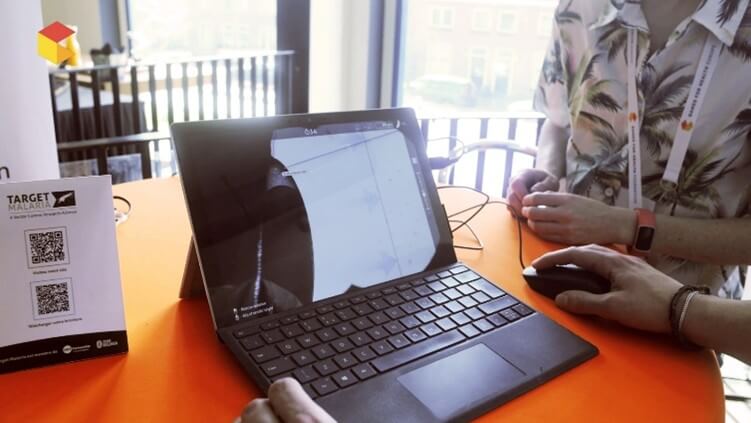
This made a fitting setting for the 11th annual Games For Health Europe Conference – a gathering equally buzzing with innovation. Emerging from the idea that games can do more than entertain, it brings together healthcare professionals, scientists, policymakers, and game developers around a shared mission: to explore how play and technology can address real-world health challenges and help shape the future of healthcare. I had the opportunity to take part and share our own creative, innovative and sustainable technologies – in the fight against malaria, with Target Malaria The Game, available for free download for desktop and mobile.
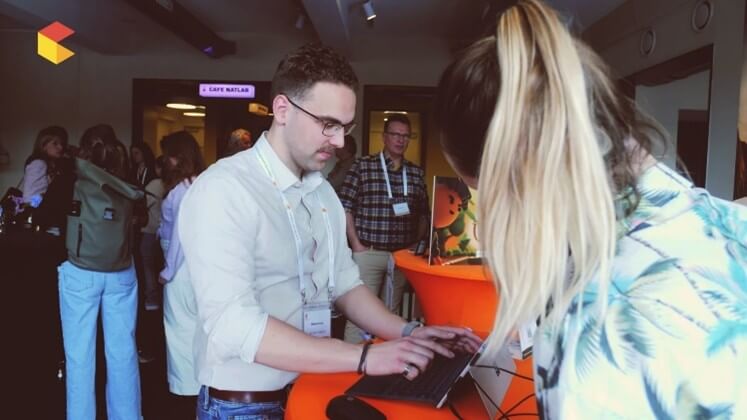
Our stand was set up alongside fellow exhibitors from thirteen different countries, between a games developer who turned real-life footsteps into a competitive race around town against friends to encourage kids to be more physically active, and nurses from a sickle cell clinic that worked with the children to develop a game that helps them learn how to mitigate their symptoms.
I was honoured to present in the “Public Health & Prevention” category, leading a lively discussion on gamifying our work at Target Malaria. The audience clearly enjoyed discovering about mosquitoes, the burden of malaria, current interventions, the ongoing global risk, and how new innovations such as genetic engineering, along with gaming, could help advance the fight to save lives. As the sessions unfolded, it became clear how many different worlds had gathered in the same space. Clinicians and researchers using games in health sat alongside academics studying game‑based interventions, while technology teams explored robotics, neurotechnology, AI, XR and data science. Psychologists and game developers contributed insights into design and real‑world application, and policy and implementation specialists focused on evidence, regulation and scale. With boundaries dissolving, the shared enthusiasm was unmistakable—a collective effort to turn play into meaningful impact.
Despite different backgrounds, purposes, gaming tools, and journeys, many games were founded from the desire to make their work in healthcare more impactful – increasing knowledge, understanding, usage, support, in those at risk or already affected by health issues. I began to see more clearly that our work sits not alone, but as part of a growing, collective approach to improve lives through play for serious change. Also like us, many were also just at the beginning, having already identified more applications as their games grow and develop and it was exciting to share experiences and ideas. The greatest challenges in health aren’t only scientific but human: earning trust, building support and creating conversations that bring people into the story. Innovation is therefore not just biological but communicative.
Credit: Games For Health Europe
Working on malaria, one of humanity’s oldest and deadliest diseases, has made that clear to me. Solving problems that have persisted for centuries means using every tool available—not only in biotechnology but in how we connect with people and communities.
That’s why joining Games for Health felt so inspiring. Play is often dismissed as entertainment, yet it’s one of the first ways we learn because it is immersive, social and deeply engaging. As gaming technology evolves, we have a chance to harness that power, bringing together two once‑separate fields to create experiences that are not just fun but meaningful, transformative and even life‑saving.
I would like to thank the Games For Health Europe 2026 organisers and my fellow exhibitors, speakers and guests for the entertaining yet educational experiences.
Michael Marston for developing the game and turning an idea into a real-life game.
Target Malaria, Crisanti Lab and everyone involved in making, testing, playing the game, and being part of the conversation.
? Together, we can win the fight against malaria. ?